Showing posts with label hive. Show all posts

CHOOSING YOUR BEES


CHOOSING YOUR BEES


So you are interested in being a backyard bee keeper? Two bee types should interest you:
   
Carniolan Bees are a favorite among new beekeepers because they are hardy and have a large foraging
range. They thrive in urban areas and adapt quickly to changes in the environment. They originate from the Danube
River Valley in Eastern Europe and its geographical heritage makes it better suited for colder northern climates. They
are exceptionally docile and are known for early spring population explosions at the first sign of pollen.
   
Italian Bees are less able to cope with the hard winters of the northern latitudes. They are relatively
gentle and calm and are therefore a favorite in highly populated, highly trafficked areas, but are prone to robbing
neighboring hives. Italians are excellent housekeepers, which some scientists believe is a factor in their ability to
resist disease.

COMMON QUESTIONS

Q: How much time do bees take?
A: Bees are less time consuming than most domesticated pets or livestock. Bees should be checked no more than
once a week. After they are established, they can go two weeks between checks. Once winter comes, they shouldn’t
be opened to check until spring to avoid chilling the hive.
Q: where are bees kept?
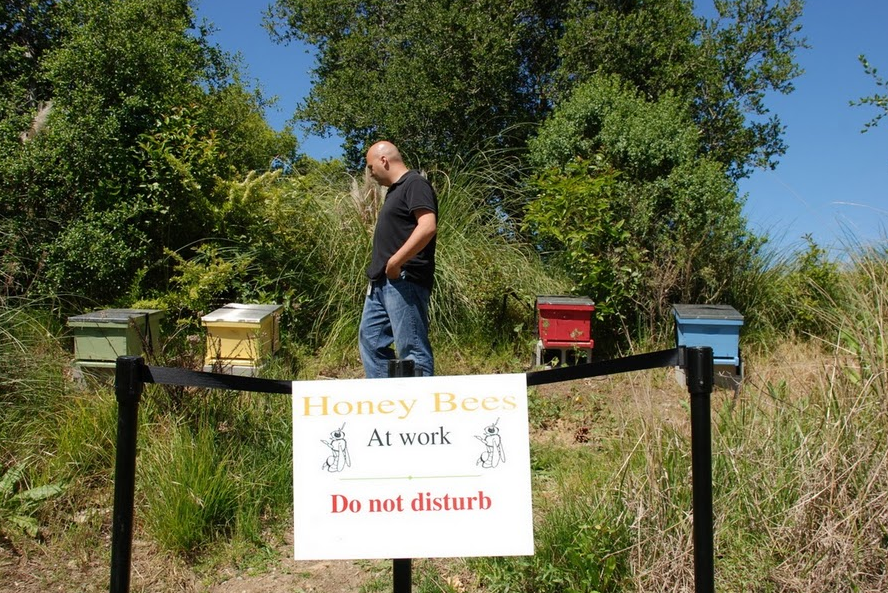
A: If you plan to keep bees in a residential area, face the entrance away from any play, work, or lounge areas. If your    
yard is fenced, put your hive in a corner, forcing the flight pattern to go up and out. Always have a water source for
your hive to help keep them from becoming a nuisance. Also, face the hive entrance opposite of the wind direction.
Q: How small of an area can I keep bees in?
A: Bees can be kept on very small lots and very small areas. There are many beekeepers in urban areas that keep
bees on roofs or porches. Check your local and state codes for any laws regarding space.
Q: How much honey will a new hive produce?
A: Honey production can range from 0-50 lbs, even in the first year. If you are worried about too much honey, let
your friends and family know you have honey and you will be their new best friend.
Populating the hive: how to

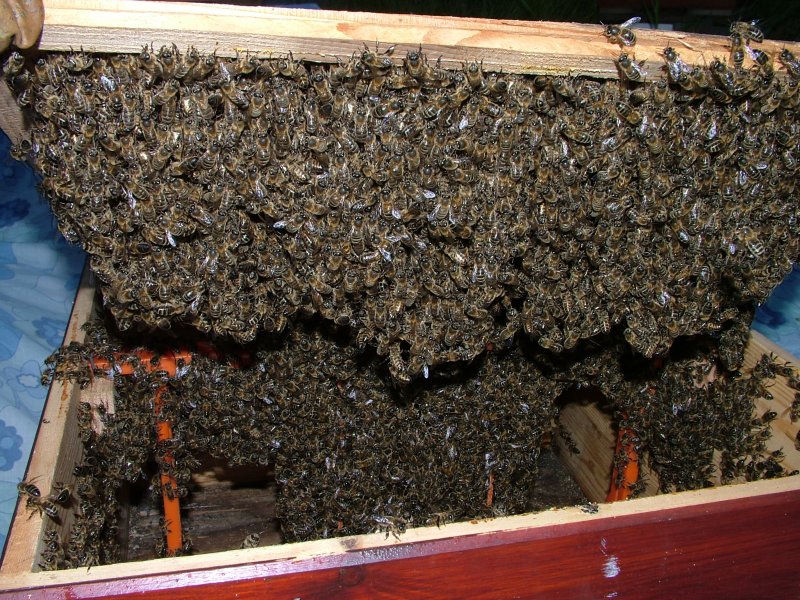
There are two ways of populating a swarm:

1. Baiting a swarm

•Use a small hive that has already been inhabited by bees and fill it with frames or top
bars; two of the frames should contain combs and the others should have foundation
sheets or strips of old comb.
•Place the hive in a tree or on a roof in such a way that there is some protection from
the wind.
•Place the hive in its desired place the very day that the swarm has taken occupation of
it.
•Baiting is useful only in the swarming season, usually at the beginning of the dry season
and end of a cold season.


2. Capturing a swarm

You may capture a newly settled swarm around a branch of a tree, but make sure you wear
protective clothing.
•First sprinkle cold water over the bees with a brush or spray bottle to stop them from
moving away.
•Hold a small hive without frames, a basket or a box under the swarm.
•Drive the bees into the hive with a bee brush or smoke.

Site selection

Beehives should be placed near a source of water (river, stream, lake, dam or natural
or man-made ponds) and in an area with adequate vegetation, such as coffee, sunflower,
moringa, mangoes, oranges, bananas and other flowering plants.
The site should be fenced to protect bees from people and animals (and people and
animals from bees).
Hives should be located at least 30 metres away from roads and public or noisy places.

Choosing the right hive

There are lots of different beehives, but really only 2 major types - moveable frame beehives  and top bar hives

In the Western world, moveable frame beehives are the most common, but there are dozens of different designs. Generally the parts of each are not interchangeable, so you are best to pick one type of beehive and stick with it.


  • The most common designs of moveable frame beehives are
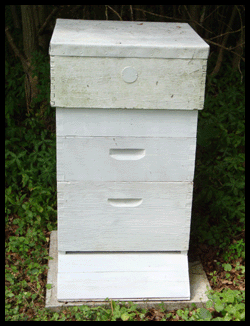
  • The Langstroth Hive
  • The National Hive
  • The Commercial Hive
  • The WBC Hive

 The Langstroth Hive

Before the invention of the modern beehive, bees were kept in upturned baskets called skeps. When the honey was harvested the colony was destroyed and all the bees killed, which was obviously not good for either the bees or the beekeeper.

In the mid 19th century, Reverend LL Langstroth patented a 'moveable frame' beehive. This was based on the idea of 'bee space' - if the correct space is left between the frames, the bees will neither build comb in the space nor cement it shut with propolis. 

This meant that the frame could be lifted out without destroying the hive, and was truly revolutionary. Rev Langstroth is still considered the "Father of American Beekeeping."

All modern beehives are still based on the Langstroth Hive, and the Langstroth hive itself is still the most commonly used beehive today - especially in the United States. It is a simple hive in construction and easy to maintain and, especially if it is common in your area, is often a good choice.

The National Hive

The National Hive is a variant on the Langstroth, and is the most common hive in the UK. It has a much smaller brood box than the Langstroth.

Some beekeepers argue that it has too little brood area for the modern productive bee. Although you can overcome this by adding on another super to the brood box (known as a "brood and a half"), one drawback is that it makes it more difficult to locate the queen.

The supers are also smaller, and this has the advantage that they are much easier to handle when full of honey.


The WBC Hive

 The WBC Hive is the classic traditional beehive, named after its designer William Broughton Carr. Unlike the other moveable frame hives which are single walled, the WBC hive is double walled. The outer part is made up of pyramid sections, giving the WBC it's distinctive look.  The inner part is separate loose boxes which contain the frames.Its main advantage is that it stays cool in summer and warm in winter. Also, because it is double walled, the supers themselves are thinner and so lighter to handle

The main problems with WBC hives are that they are a complicated design and cumbersome to work with. To get at the supers, all the outer sections have to be removed first, so in practical everyday terms they really are inferior to the other beehives.


The Commercial Hive
The Commercial Hive, as the name suggests, is best suited to commercial beekeepers. It is very similar to the national hive, except that the frames are deeper and so hold more honey.

While this can be seen as an advantage, it does make them heavy and difficult to handle manually when they are full of honey. For this reason, hobbyist beekeepers tend to stick to the lighter, more manageable beehives.
There are many other beehive designs based on the Langstroth hive. The Dedant is popular in France, the Smith common in Scotland, and too many others to mention have their regional followers.

Which one you choose will be influenced by a lot of factors, including price, materials, availability, and local conditions. A good general guide is stick to what is popular with local beekeepers in your area -  a beehive which works for them will likely be a good beehive for you too